Copper Mould Tube Repair and Re-Plating: Repair or Replace?
MaintenancePublished 17 October 20263 min read33 views
A copper mould tube is 35–60 kg of high-grade copper. When the chrome wears through, most of that copper is still perfectly good. Re-machining the bore and re-plating it costs typically 35–50 % of a new tube and gives a tube that performs like new, provided the copper has not softened and there is wall to spare. Not every tube qualifies; here is how to tell.
When should a tube be repaired?
Chrome worn through or damaged, but no cracks in the copper
Exit section grown by no more than 0.5–0.8 mm (taper can be restored within the wall allowance)
Wall thickness still at least 1.5–2 mm above the drawing minimum after re-machining
No deformation of the casting radius or bulging of a face
Copper hardness still within the material specification (no recrystallization)
When should it be replaced?
Cracks in the copper, not just in the chrome
Wall already at minimum, or a previous repair has used the allowance
Bore grown so far that restoring the taper would take the section out of tolerance
Copper softened (hardness below specification): the tube will lose taper again quickly
Radius or face deformation: cannot be corrected by machining the bore
More than two or three previous re-plating cycles
Inspection first: the CMM report decides whether the tube is a repair candidate.
The repair process
Inspection. Visual, CMM measurement of the bore at five levels, wall thickness at eight points, hardness, dye penetrant on the bore for cracks. The report goes to you with a repair / replace recommendation and a price.
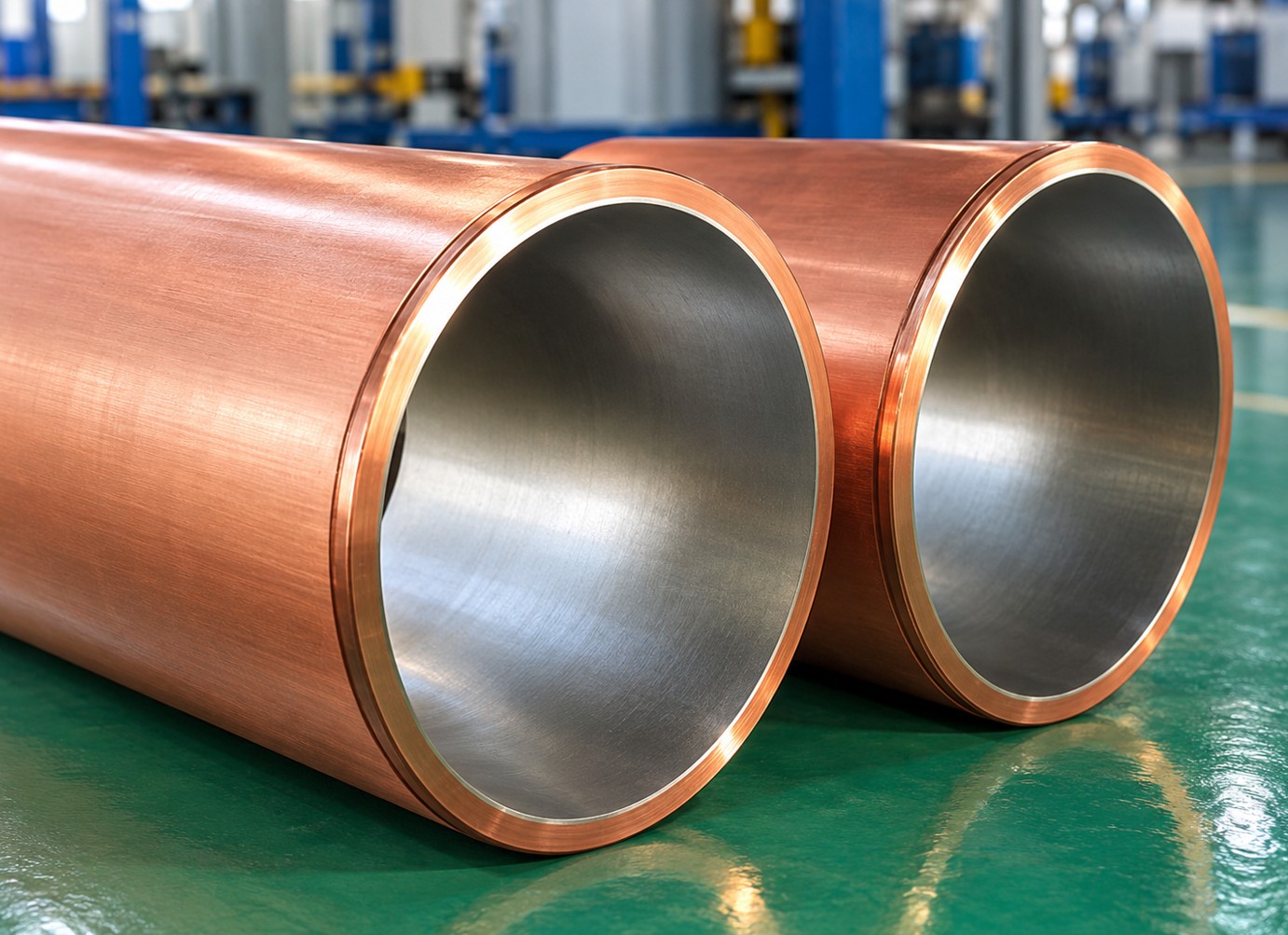
Chrome stripping. The old chrome is removed electrolytically without attacking the copper.
Re-machining. The bore is re-machined on the curved fixture to the original taper profile, removing the worn layer and the section growth.
Taper restoration. Because the whole bore is machined, the section at every level is brought back to the drawing; the finished section is typically 0.2–0.5 mm larger than the original nominal, which is inside the tolerance of most casters. We confirm this with you before machining.
Polishing. Bore polished to Ra ≤ 0.8 µm.
Chrome re-plating. Hard chrome 0.08–0.12 mm (or Ni-Cr), same as a new tube.
Final inspection. Full CMM report, chrome thickness, roughness; photos before packing.
Lead time is usually two to three weeks from receipt of the tubes. Many customers keep one set in circulation: one set casting, one set at the repair shop, so the caster is never waiting.
What it costs, and what it saves
Repair pricing depends on the section and on how much machining is needed; as a rule of thumb, 35–50 % of the new-tube price including return freight. For a plant changing thirty 130 × 130 tubes a year, repairing two-thirds of them is a substantial saving with no change in casting performance.
How to start
Send photos of the bore at the meniscus and exit, the tube marking, and if you have them, the exit section measurements. We tell you whether the tube is a repair candidate before you ship anything.
Frequently asked questions
Can you repair tubes from other manufacturers?
Yes, any copper mould tube; we work from the tube itself and, if available, the original drawing.
Does re-machining change the billet size?
By 0.2–0.5 mm. Tell us if your caster has a tight section tolerance and we advise.
Do you repair water jackets too?
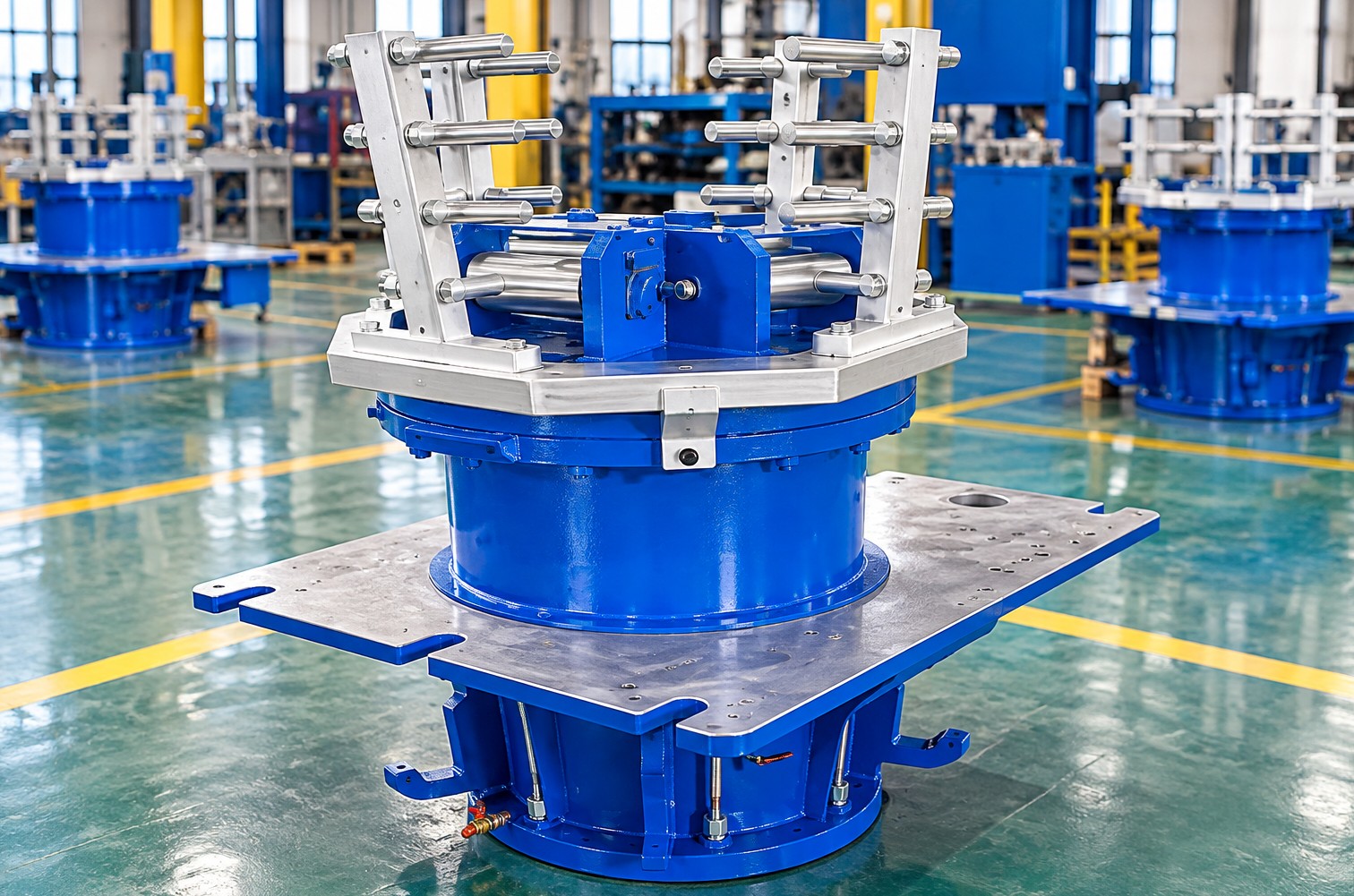
Yes, jackets are re-sealed, re-machined and pressure tested; see the water jacket page.
Have a worn tube? Send photos of the inner surface, the tube marking and the measured exit section — we will tell you whether it can be re-machined and re-plated, and at what cost.Send photos for evaluation